Hard Copy (2026)
Degree project. Glass, cast glaze, copper, PLA, AI. Konstfack 2026.
I trained neural networks at home, on my own computer, to understand how they see. Once I understood that, I could think like them, and I invented the objects in the exhibition using that way of seeing as a tool. I design the conditions. The organisms do the rest.
Hard Copy is my graduation project from the BFA programme in Ceramics and Glass at Konstfack, spring 2026. It grew out of two years of experiments at the kitchen table and in the studio: image models trained on my entire camera roll, an evolution simulation that generates digital organisms, WiFi signals that disturb video when someone moves in the room, and cast glass and ceramics where the results finally get bodies.
The exhibition was built in three zones in the Svarta Havet hall at Konstfack, May 2026.
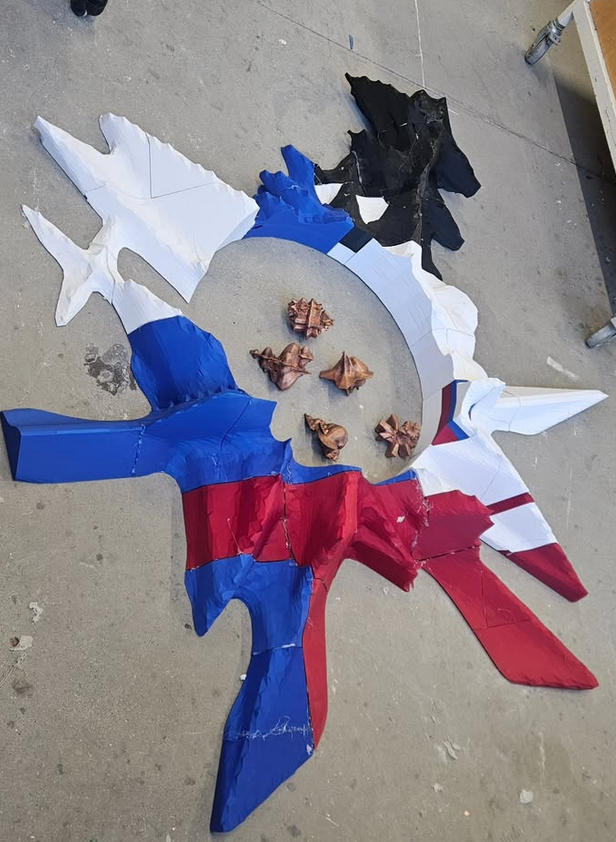
A gold-sprayed star-shaped sculpture with a mirror at its centre, mounted on reinforcement mesh. Beneath it a motor and neodymium magnets move the copper-plated organisms across the surface. The arena is itself a slice of an organism, so what moves inside it are bodies within a body, and both existed first as code.
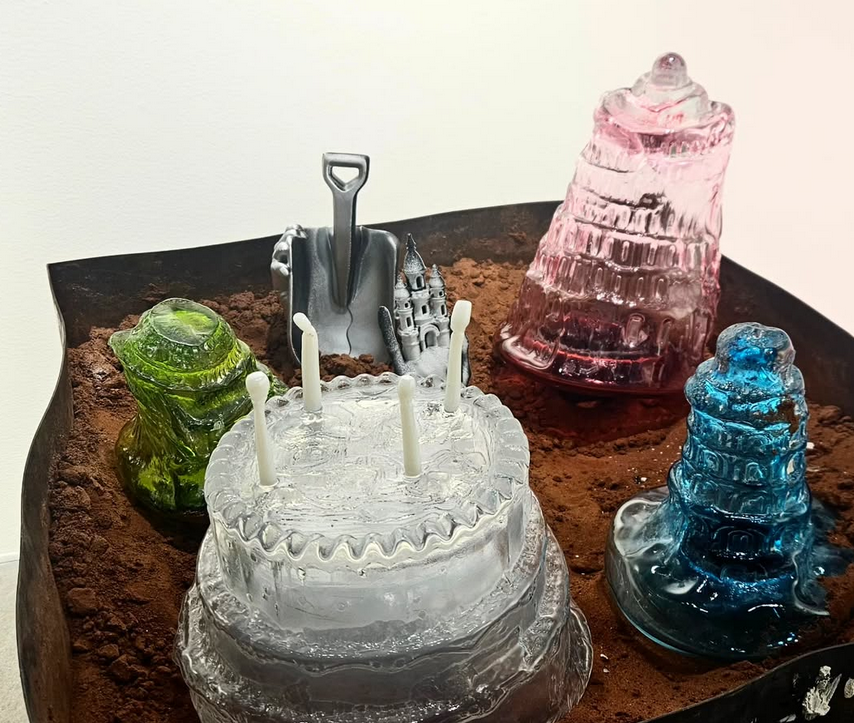
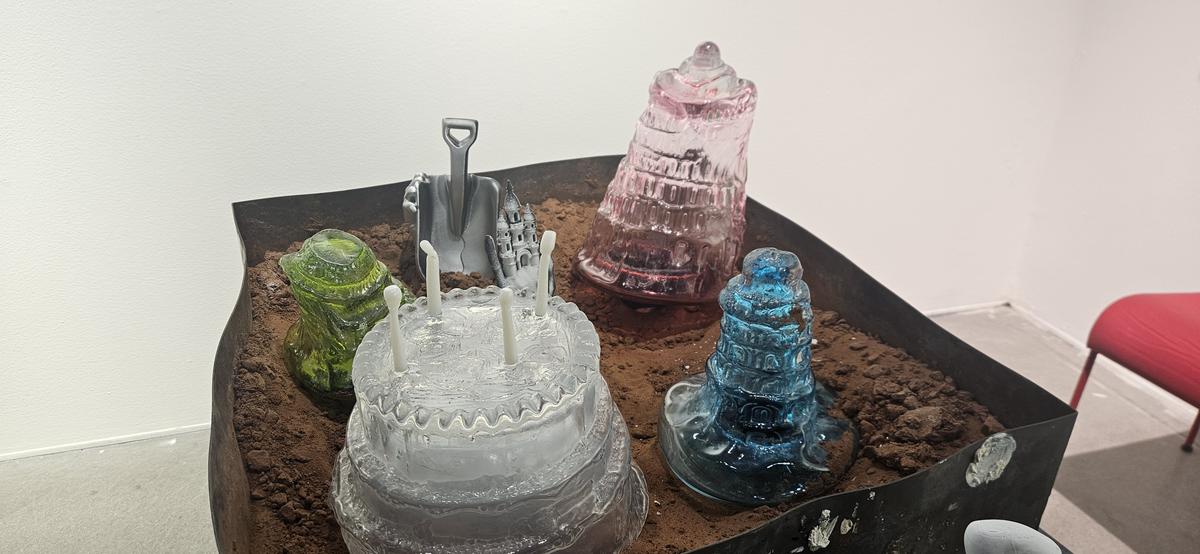
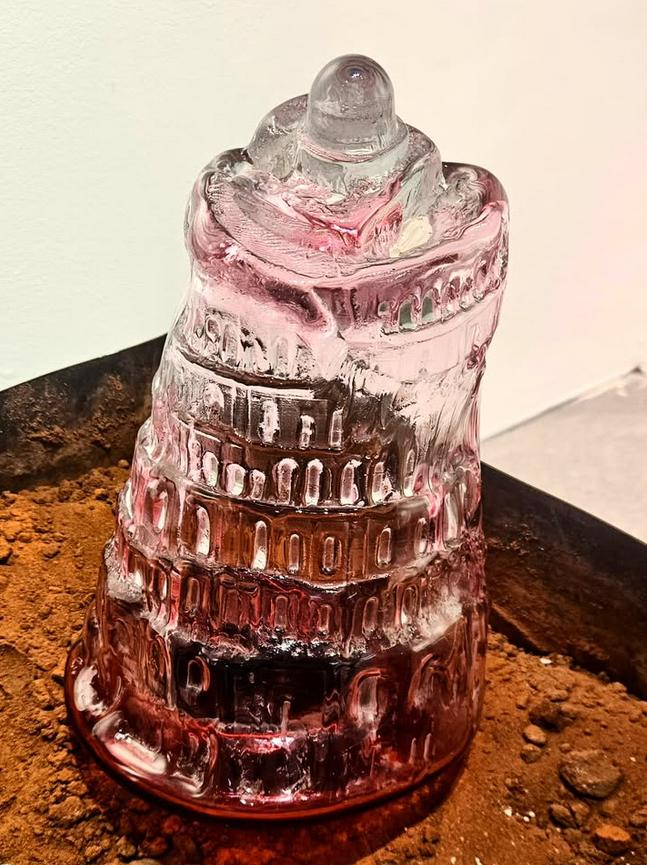
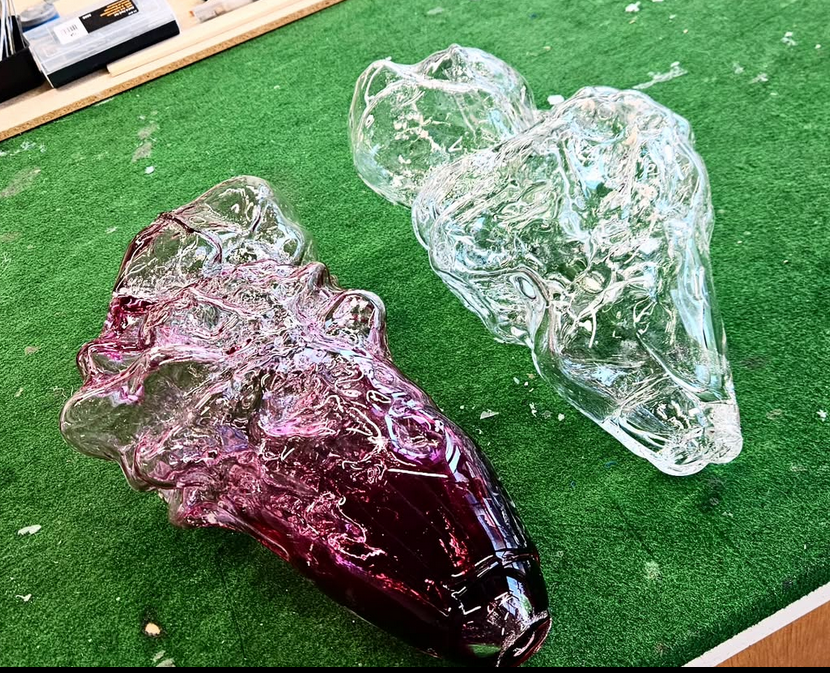
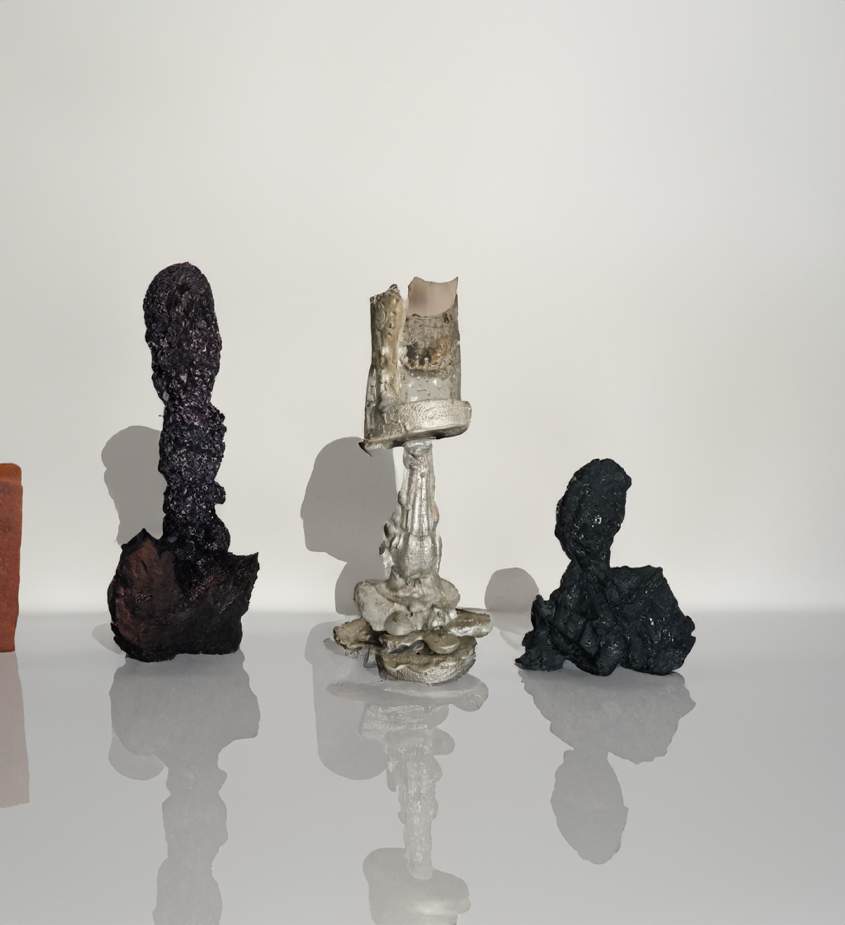
Cake and the Tower of Babel are neighbours in latent space. Both layered, conical, built upward. An AI that has never had coffee and never read the Bible sees them as almost the same thing, so I asked the network to show me what lies between them and blew the answer in glass. The objects stand in casting sand together with a spade made of glass.
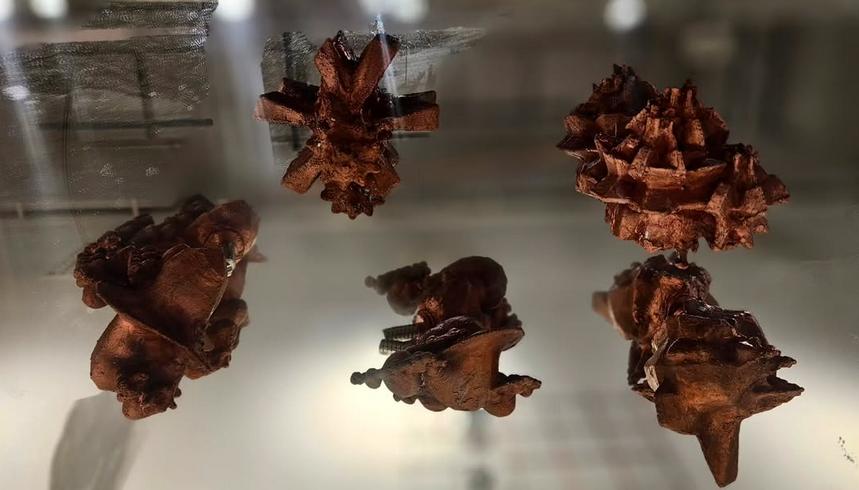
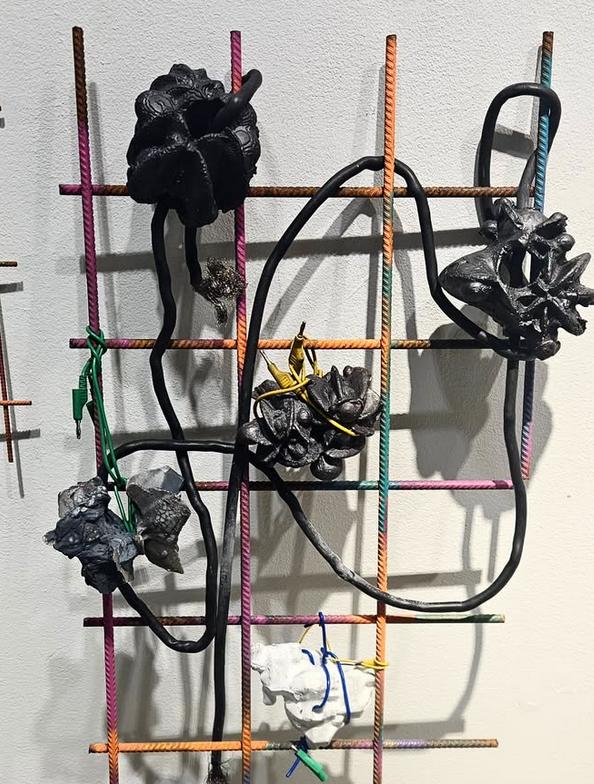
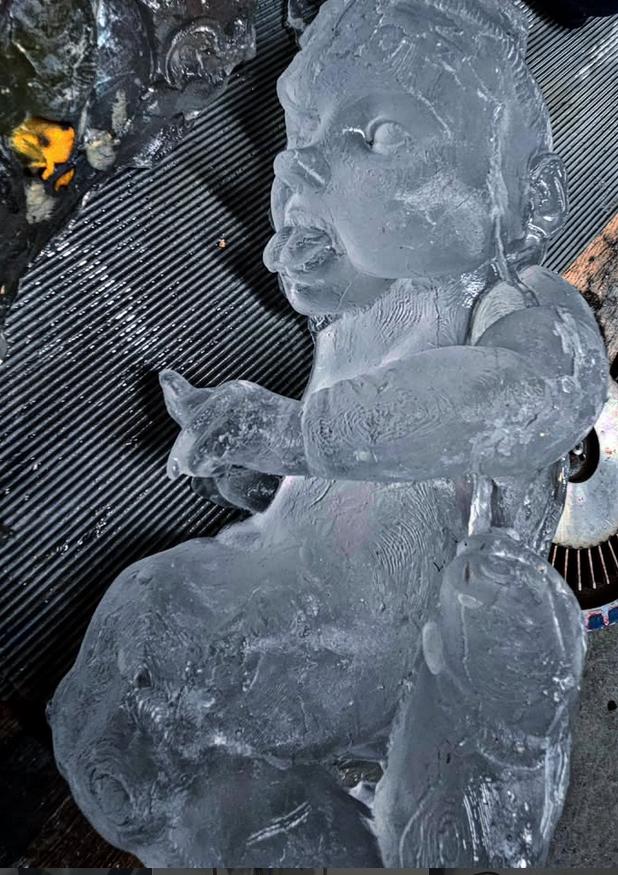
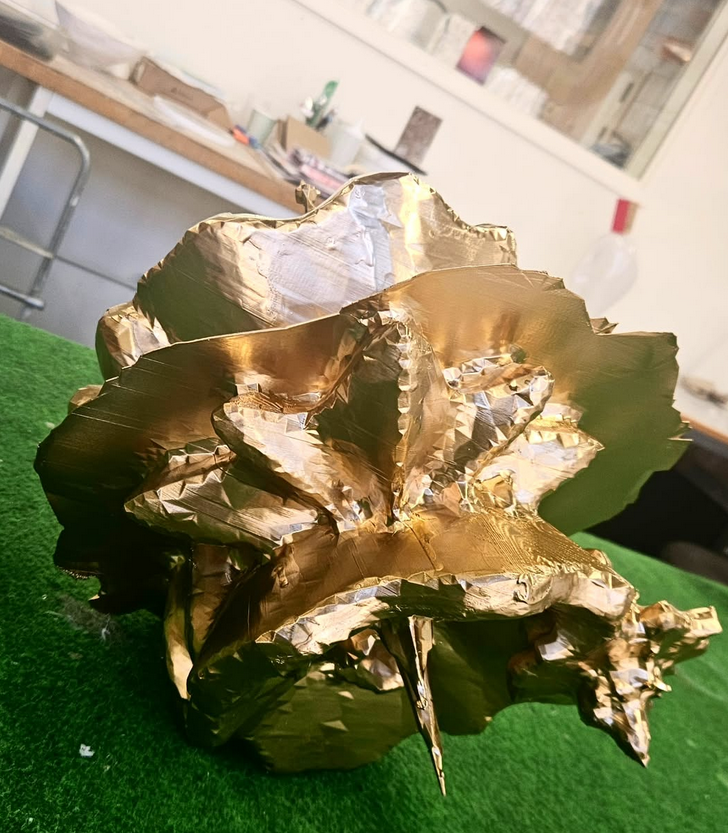
The same organism family in every stage of materialisation, hung on reinforcement mesh with cables: raw white prints, one painted gold, sandblasted creatures, cast-glaze creatures fired in graphite coating, blown glass that only hints at the forms, and the glass child. The print is always temporary. It becomes a negative for casting, a skeleton for plating, or a sacrifice burned out to make room for glass.
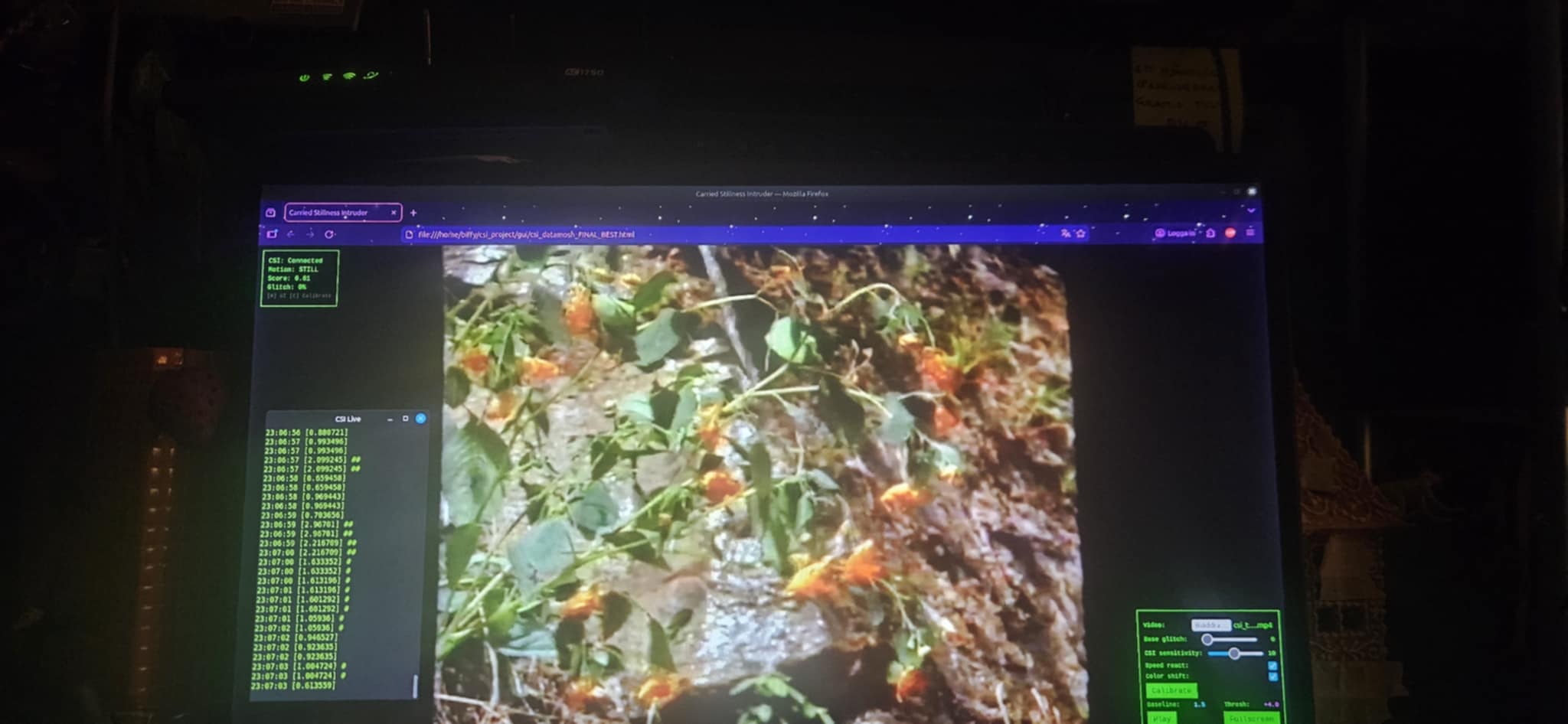
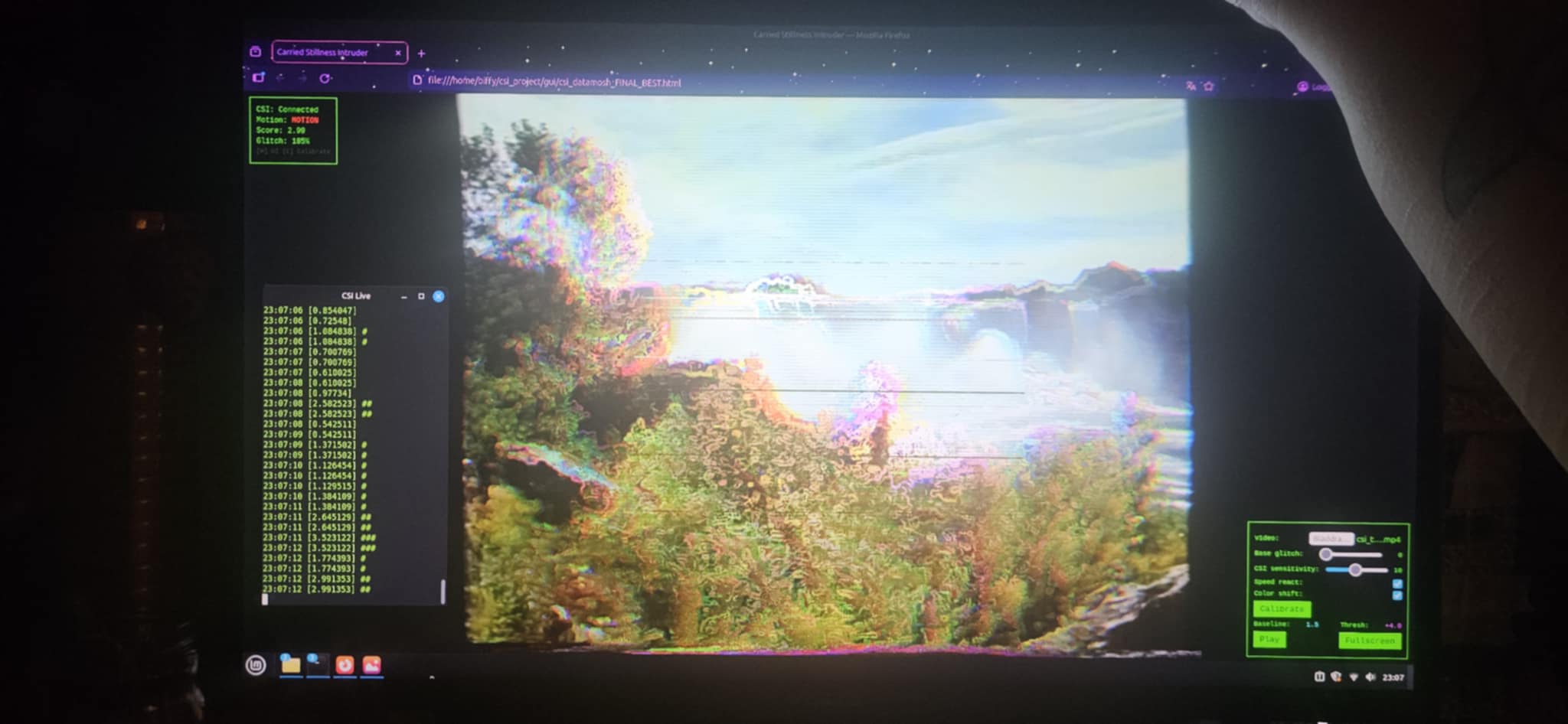
Four small sensors measure the WiFi signals in the room. When a body passes between them the signal is disturbed, and the disturbance leaks into the video shown: the image breaks, tears and heals again as the room stills. The visitor affects the work simply by being there, without a camera, without any image of the visitor existing.
Most of what happened this year is invisible in the exhibition. Here is the whole course as it looks in my log files, with the crashes, the dead ends, and the nights when something finally worked. A degree project in hindsight sounds like a straight line. It was not.
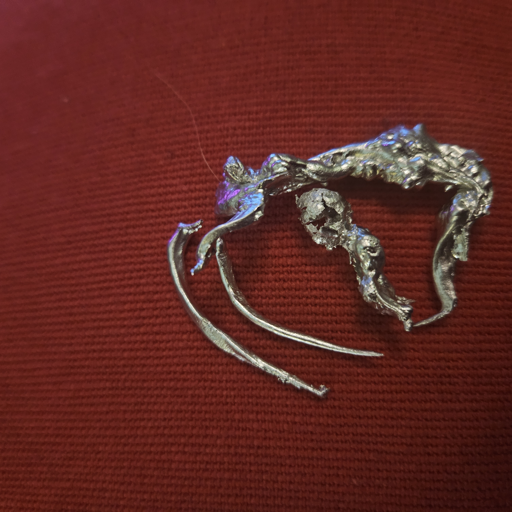
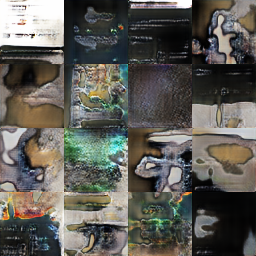
The project was first called IN SILICO. In January I wrote twelve versions of the project description over one night and day, 19 to 20 January, while training the first image networks on my camera roll. 46 experiments from that period are archived, most of them failed. On 22 January the first results that resembled anything arrived: twelve images from a network that had begun to understand material and colour.


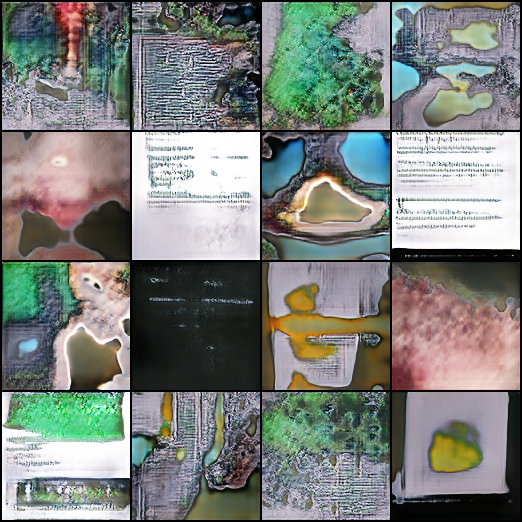
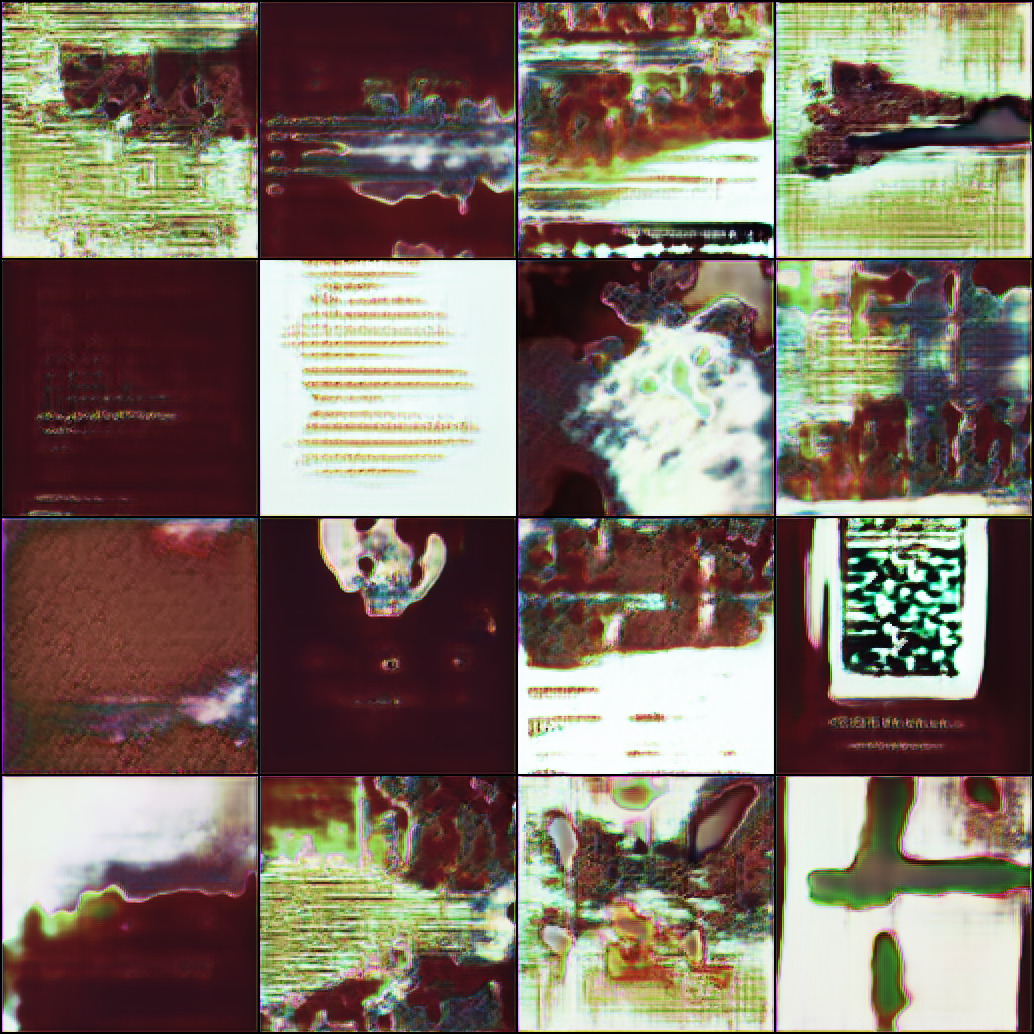
The GAN builds resolution layer by layer, doubling the image each time a new level is added.
On 1 February LAJFI got its first commit, an evolution simulation where creatures with 32 DNA parameters reproduce, mutate and die without any fitness function telling them what is good. Of over 400 exported individuals I finally chose 23.
On 13 February the disk was 99 percent full. I cleared 227 gigabytes of experiment data and changed the image-generation strategy the same day. The log file from that day is the most honest text in the whole project. On 20 February a problem that had eaten weeks resolved: the organisms could finally be printed and cast, five of five forms watertight. The solution was to compute the tunnels on the processor instead of the graphics card, which had been guessing wrong.
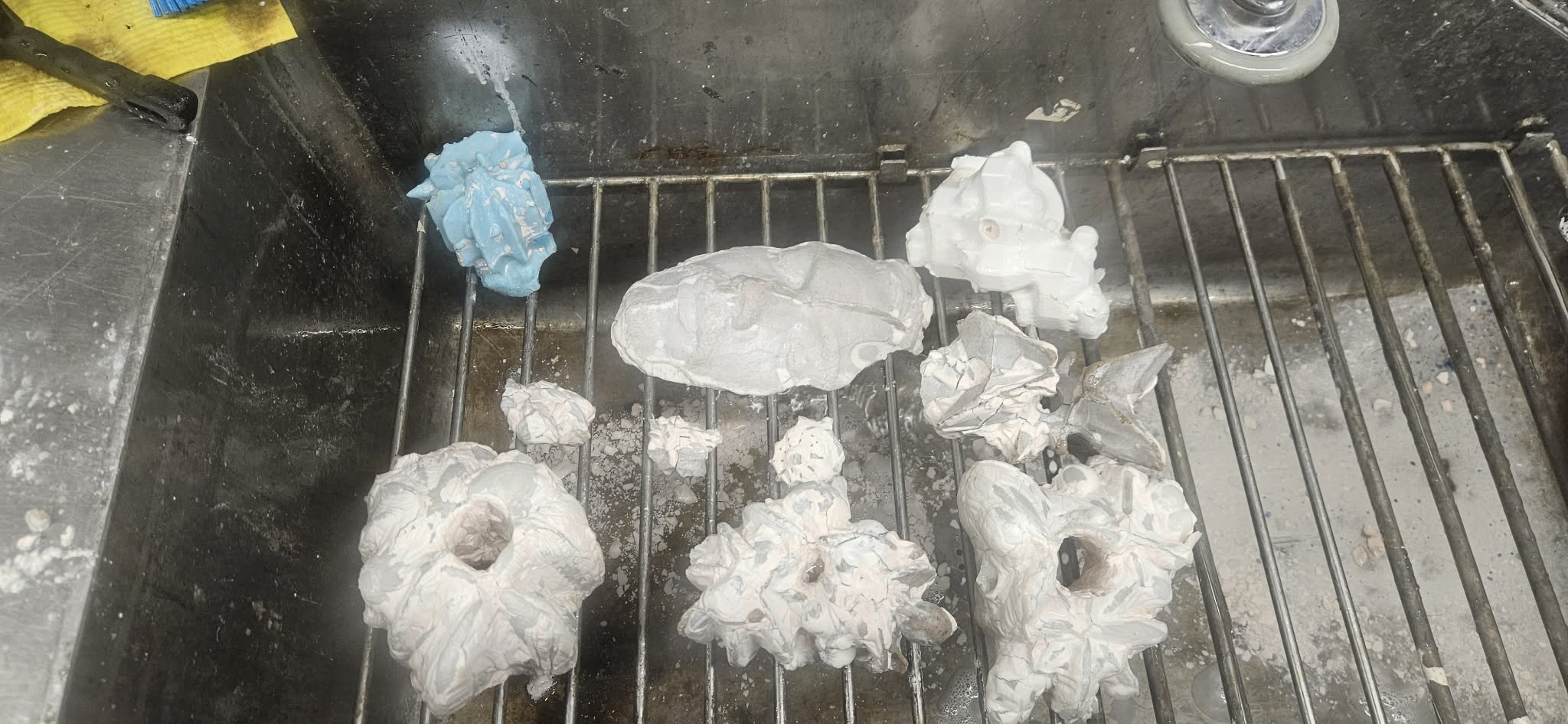
On the night of 15 March I stood in the Konstfack hot shop and ran three glass recipes in parallel in gypsum-silica moulds. Two days later I opened the moulds: the frit recipe was whole but too porous, the beach-sand recipe was sturdier with visible grains, and the stoneware glaze never sintered, built for 300 degrees more than my kiln could give.
At the same time I trained a LoRA on top of Stable Diffusion for ten and a half hours, and at a quarter to two in the morning on 20 March I discovered why the results were so uniform:
ALL 7770 images had the same caption: "a photo of nadja_art". The model learned only the average of every image.
Retraining started at two that same night. On 21 March Carried Stillness Intruder was coded together in a single day. On 29 March the GAN training began again from scratch at higher resolution: level 6, 256 pixels, fifteen hours.
Level 7, 512 pixels, took two and a half days and finished on 1 April. Then I tried to take the network to 1024 pixels, and what followed was seventeen days of failure: eighteen runs between 2 and 19 April, all stopped by out-of-memory, exploding gradients or pure divergence. The best run survived 33 epochs. The last one spun for 25 hours with 86 percent broken values before I pulled the plug.
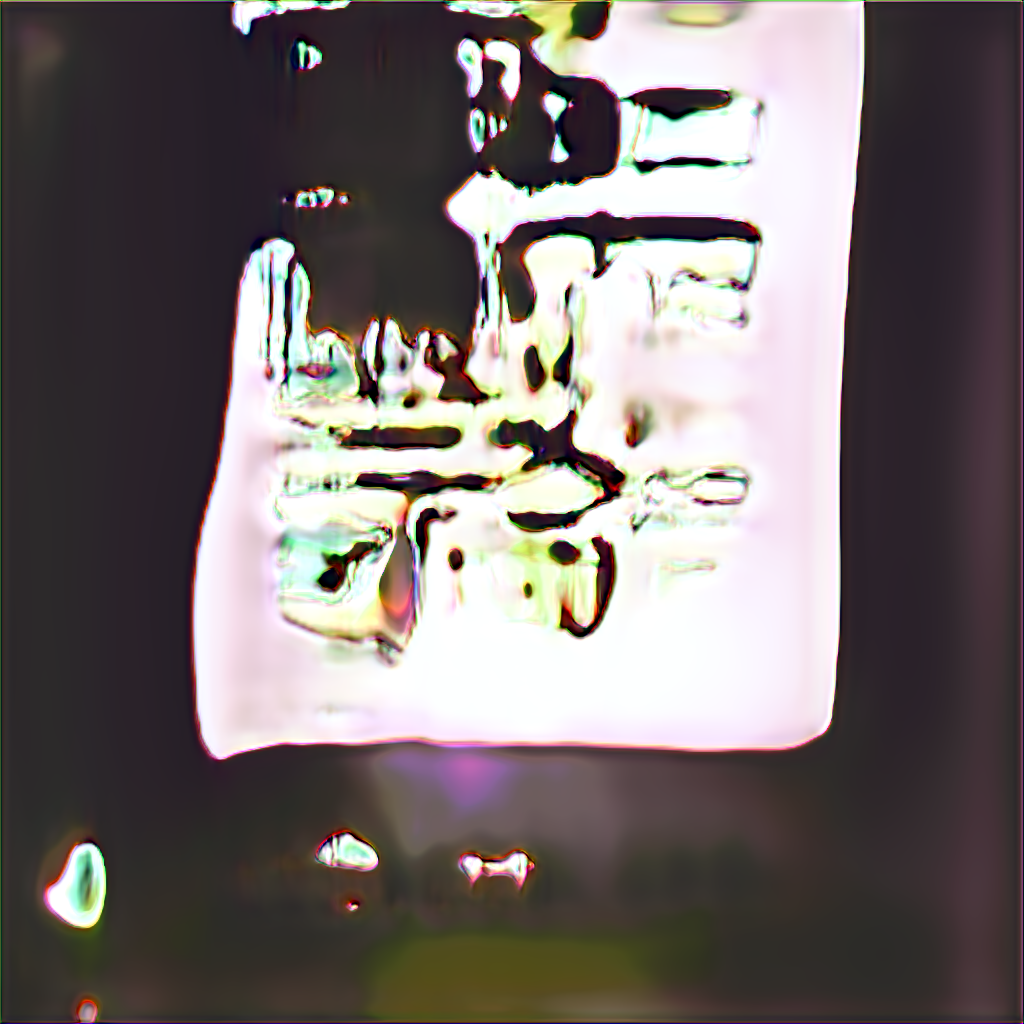
On 19 April I found the root cause: the training images were 512 pixels, and at 1024 the network learned interpolation artefacts instead of image structure. Level 8 was abandoned. On 15 April I photographed the arena on the workshop floor, still unpainted.
In the first week of May two more architectures crashed, their CUDA kernels would never compile on my machine, zero trained epochs. On 3 May the whole computer froze. From what did work, the final videos were rendered instead: ten minutes of latent wandering through the level 7 network, and a ten-second birth sequence.
On 12 May I morphed the silicone experiments into moving material:
The exhibition opened at Konstfack in late May. The thesis was submitted on 23 May, the final version on 28 May. The diploma arrived on 8 June.
LAJFI, the evolution simulation that gave birth to the organisms, runs live at vetroal.se/lajf. The full degree project, thesis and documents, lives at vetroal.se/examen.